Structural Drying — and Why It Works Differently at 6,035 Feet
Structural drying is the process of removing water from building materials — not from the air, and not from the surface — and proving with meter readings that it has actually gone.
- ✓IICRC-certified technicians
- ✓We dry to a documented dry standard
- ✓Colorado Springs and El Paso County
Water damage
How do you know when something is actually dry?
By comparing meter readings on affected material against unaffected material of the same type in the same building. That comparison is the dry standard, and it is the only defensible definition of finished.
It matters because “dry” is not a fixed number. Dry for framing lumber is not dry for gypsum board, and dry for oak flooring in January is not dry for the same floor in July. A single reading in isolation tells you almost nothing. A reading of 14% means one thing on a subfloor and something else entirely on a stud.
So we take a baseline in an unaffected part of the structure — same material, same building, same conditions — and we dry the affected material until it matches. Then we document it, because the readings are what prove the job is complete to you, and to your adjuster.
The thing this replaces: a technician putting a hand on the drywall and saying it feels dry. In this climate that is close to worthless, for reasons covered further down this page.
Colorado Springs
Why do dehumidifier capacity ratings mislead here?
Because those ratings are measured in conditions your house will not be in.
Dehumidifier capacity is published at AHAM test conditions — 80°F and 60% relative humidity. That is a warm, humid room. A unit rated at 150 pints per day is rated in that environment. Put the same machine in a 40°F crawl space and real-world output drops sharply, to a fraction of the rating.
Two things in Colorado Springs push conditions away from the test standard in the same direction:
- Temperature. Refrigerant dehumidifiers work by condensing moisture on a cold coil. As ambient temperature falls, the coil approaches freezing, the unit spends more time in defrost, and output falls with it. Unheated crawl spaces and winter losses sit right in that band.
- Air density at altitude. At 6,035 feet the air is less dense than at sea level. Equipment that moves and processes a volume of air is moving less mass of air per pass. The same derating logic that applies to temperature applies to elevation.
The practical result is that a job specified purely off nameplate capacity will be under-equipped. That is why sizing comes from the loss class and the actual conditions in the building, not from adding up numbers on labels.
Water damage
When do you use a desiccant instead of a refrigerant dehumidifier?
When the space is cold, when you need a lower relative humidity than a refrigerant unit can reach, or when the material is dense and slow to release moisture.
Refrigerant dehumidifiers — including LGR (low grain refrigerant) units — condense moisture from air on a cold coil. They are efficient in warm conditions and they are what runs on most residential jobs.
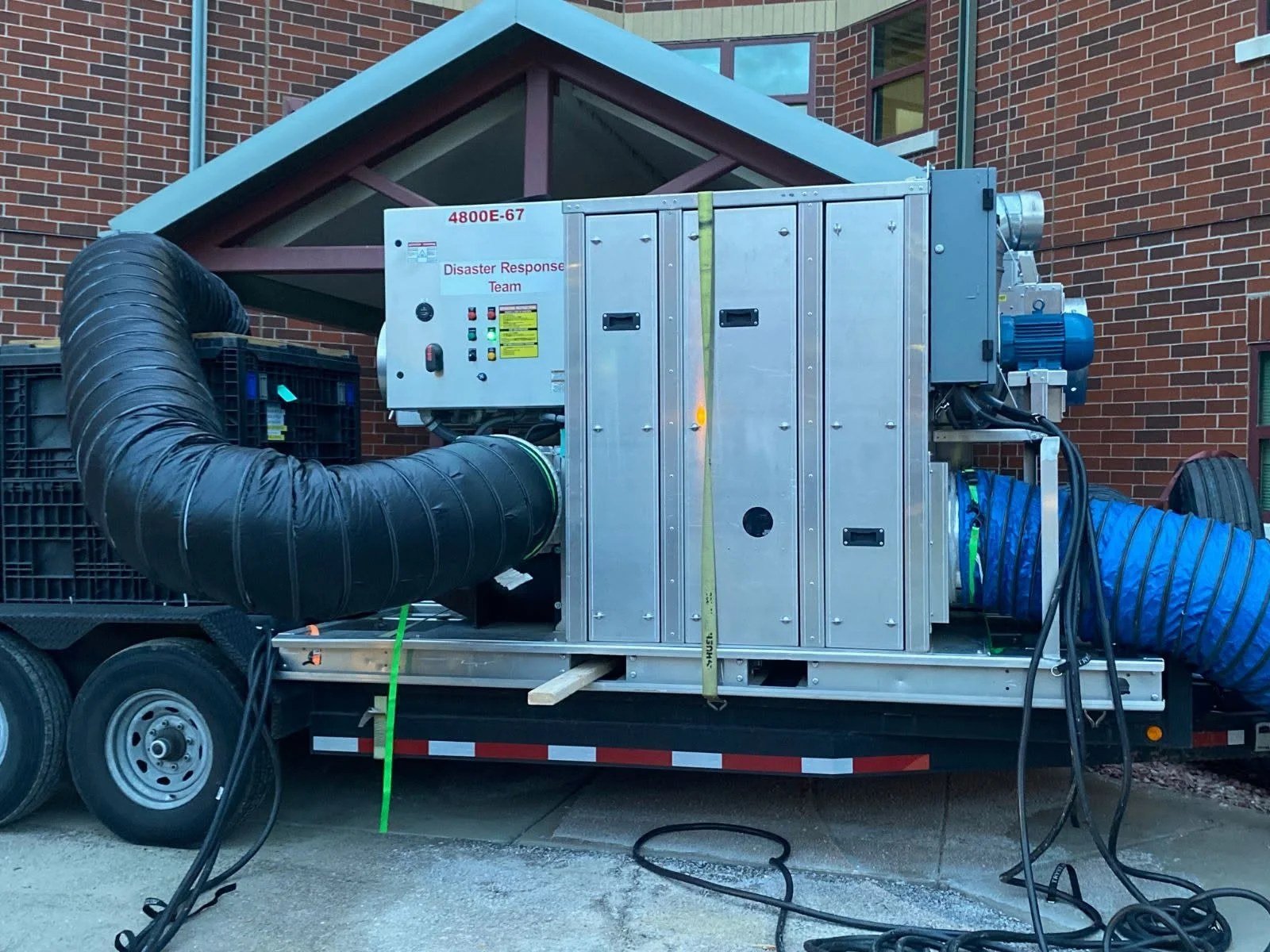
Desiccant dehumidifiers pull moisture onto a chemical medium instead of condensing it. They reach a lower relative humidity than refrigerant machines can and they continue to work down to roughly −4°F, where a refrigerant unit has long since stopped being useful.
Three local situations where that matters:
- Unheated crawl spaces, which describes a great deal of the older Westside and downtown housing stock
- Winter losses in Colorado Springs, where burst risk climbs below about 20°F with six or more hours of exposure and the space you are drying is frequently unconditioned
- Dense assemblies — hardwood over subfloor, plaster over lath, concrete — where the surface dries quickly and the core does not
IICRC S500 also sizes the two types differently. Refrigerant units are sized from the volume of the space and the class of loss. Desiccants are sized by air changes per hour, because what matters is how many times you can process the air in that space rather than how many cubic feet it contains.
(Only publish if this equipment is yours — see the Image Library flag.)
Water on the floor right now?
Tell us where it came from and how long it has been there. We will give you a time, not a window.
24/7 — Colorado Springs and El Paso County
Colorado Springs
Does dry Colorado air make drying easier?
Yes, and that is exactly what makes it dangerous.
Low ambient humidity means the air has capacity to take up moisture. Used correctly — with the right ventilation strategy and enough air movement across wet surfaces — that genuinely accelerates drying compared to a humid climate. It is a real advantage and we use it.
Here is the trap. Dry air pulls moisture from exposed surfaces fast. So the drywall face dries, the carpet face dries, the top of the subfloor dries, and everything you can touch feels dry within a day or two. Meanwhile the moisture inside the assembly — behind the drywall, under the pad, between the flooring and the subfloor, inside the stud bay — has not gone anywhere. It has no path to the surface, because the surface it would use is already dry and is not drawing it out.
The result is a building that feels dry and is not. No condensation on the walls to give it away. No musty smell in the room, because the moisture is not reaching the room. Nothing visible for weeks — until a floor cups, a baseboard swells, or growth appears behind a wall.
This is the single biggest reason water damage gets found late in Colorado Springs, and it is why we meter behind and beneath rather than touching. If you take one thing from this page: in a dry climate, surface feel is the least reliable indicator you have.
Water damage
How long should structural drying take?
Most residential jobs run three to five days. What extends it:
- The class of loss. How much material is wet and how porous it is. A small amount of water across a large area of low-porosity material dries faster than a large amount into dense assemblies.
- How many days passed before drying started. This is the biggest variable and the one nobody can undo. Water migrates. Every day it sits, it reaches more material, and the scope grows.
- What is trapped. Hardwood over subfloor, tile over a mud bed, plaster over lath, and anything under a vapour-impermeable floor covering all hold water against a surface that cannot release it.
- Ambient conditions. A crawl space at 38°F is a different job from a conditioned main floor at 70°F.
We check readings daily and adjust equipment placement, not just leave it running. Equipment that sat in the right place on day one is often in the wrong place by day three, because the wet area has shrunk.
Colorado Springs
Can hardwood be dried in place instead of torn out?
Often, yes — and it is worth trying before anyone talks about replacement.
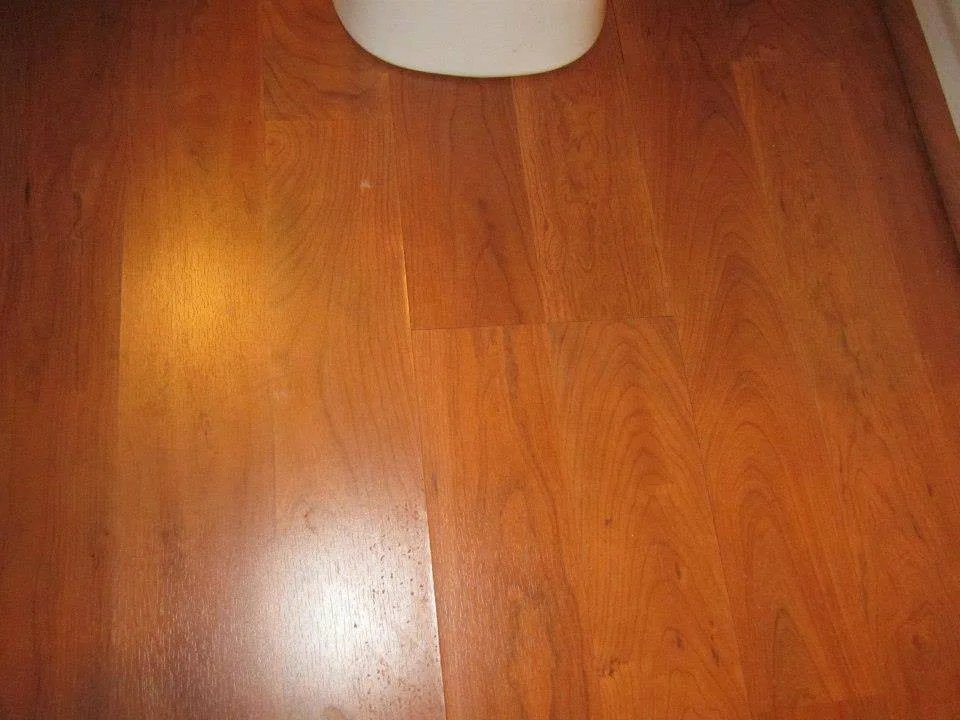
When hardwood takes on water it absorbs from below and swells across the width of each board. The edges rise relative to the centre, which is cupping. It looks catastrophic and it is frequently reversible.
The method is to force dry air down through the tongue-and-groove seams into the gap between the flooring and the subfloor, so the underside can release moisture rather than staying sealed against a wet deck. That is done with specialised mat systems or floor drying panels, running continuously while readings are tracked.
We have documented a cupped hardwood floor dried in place over about seven days, coming back flat with moisture content returning to roughly 10% — saved without tear-out. That is a real outcome on a real floor, not a brochure claim.
It does not always work. If the water was Category 3, if the boards have delaminated, or if it sat long enough for the subfloor to fail, replacement is the honest answer. But the attempt costs a few days of equipment against the price of a new floor, and the odds are good enough that skipping straight to demolition is usually the wrong call.
Call (719) 618-9013 before anyone tells you the floor has to come out.
📞 Call (719) 618-9013Water damage
What equipment actually goes into a drying job?
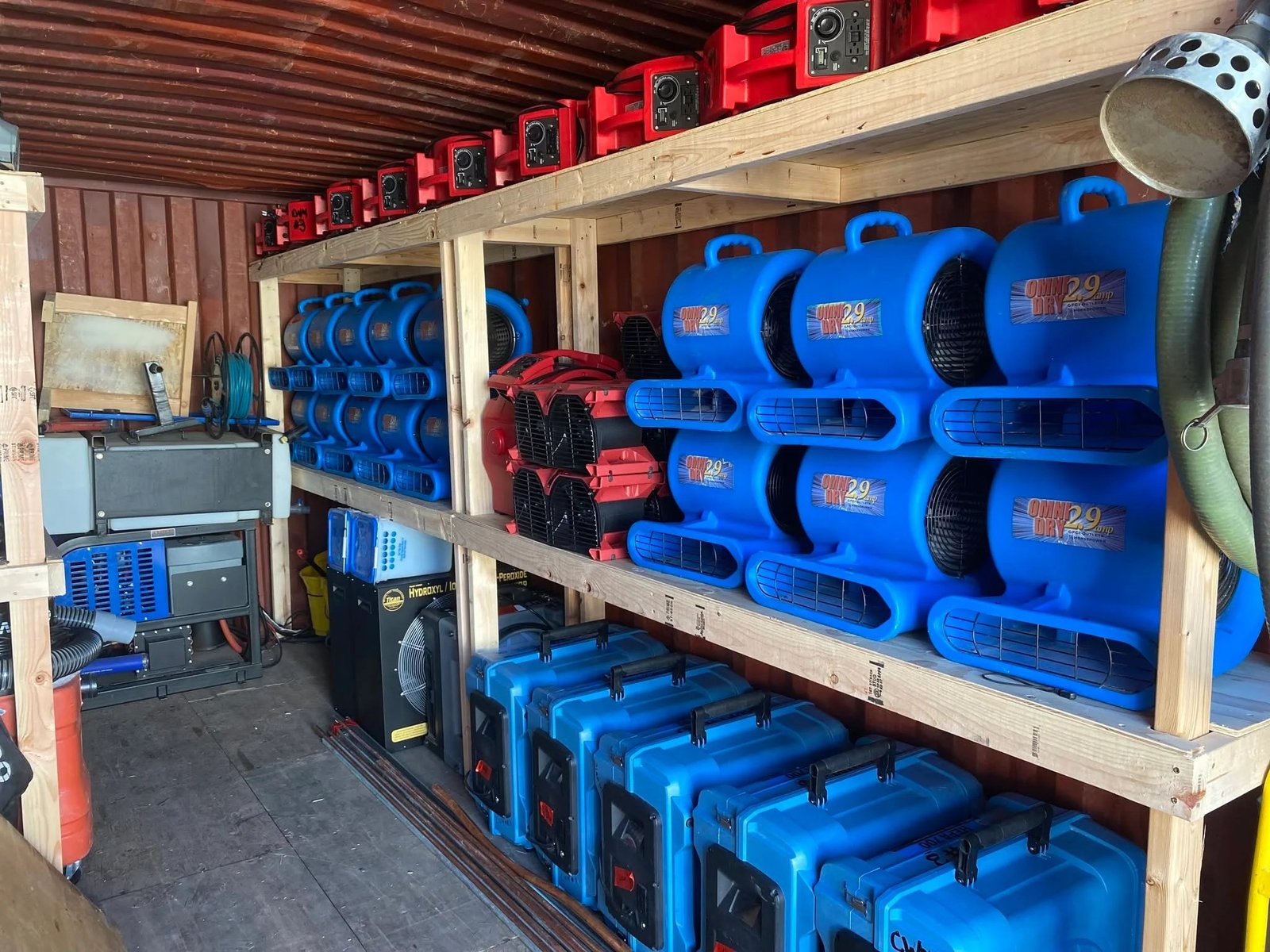
Four categories, each doing a different job:
- Air movers. High-velocity fans placed at a low angle to the surface. They do not dry anything directly — they break the boundary layer of saturated air sitting against wet material so evaporation can continue. Placement and angle matter more than quantity.
- Dehumidifiers. Refrigerant, LGR or desiccant depending on conditions, as covered above. These remove the moisture the air movers put into the air. Without them you are just relocating water.
- Air scrubbers and negative air machines. HEPA filtration where the water was contaminated or where demolition is producing airborne particulate. Also what holds a containment under negative pressure.
- Instruments. Pin and pinless moisture meters, a thermo-hygrometer for temperature and relative humidity, and a thermal imaging camera to narrow where to meter. The camera shows temperature difference, not moisture — it is a targeting tool, not a measurement.
The measurement side is where most of the expertise sits. Anyone can put fans in a room. Knowing whether the room is drying, and adjusting when it is not, is the job.
Colorado Springs
Why does the equipment have to run continuously?
Because drying is a rate, and switching it off resets the gradient.
Moisture moves from wet material to drier air, and it moves faster the bigger the difference between the two. When the dehumidifiers run, the room air stays dry and the gradient stays steep. Turn them off overnight and the air in the room re-equilibrates with the wet material — moisture comes back out of the assembly into the air, the difference collapses, and by morning you have lost most of a night’s progress.
It is the same reason we do not open the windows during drying. On a mild Colorado Springs afternoon that instinct is understandable, and in a small number of situations ventilation genuinely helps. In most it means giving up control of the environment you are trying to manage.
The equipment is loud. That is the honest trade — three to five noisy days against a much longer, more expensive job.
Water damage
When you do not need us for drying
If it is clean water, under roughly 10 square feet, on a hard surface or on carpet you are willing to lift, and you caught it the same day — you can do this yourself.
Pull the carpet back, get the pad out (the pad holds most of the water and is rarely worth saving), put a box fan across the area at a low angle rather than pointed straight down, run a household dehumidifier in the room with the door closed, and check it in 48 hours.
Call if: it still feels damp after two days, a musty smell develops, the water reached drywall or insulation, it went under a cabinet run or a floor covering you cannot lift, or it was anything other than clean supply water.
Frequently asked
Questions people actually ask
Why are there so many machines in my house?
Can I turn the equipment off at night?
Why does it still smell if you say it is dry?
What is a moisture meter actually measuring?
Do you dry the structure or just the surface?
Call Dry Standard Restoration
IICRC-certified. We meter before we quote, and you get the readings.
24/7 — Colorado Springs and El Paso County