Does Homeowners Insurance Cover Water Damage in Colorado?
Usually yes if the damage was sudden and accidental. Usually no if it was gradual, and never if it was flooding. Those three sentences decide the overwhelming majority of water damage claims in this state.
- ✓IICRC-certified technicians
- ✓We document losses in the format adjusters expect
- ✓Colorado Springs and El Paso County
Water damage
Does homeowners insurance cover water damage?
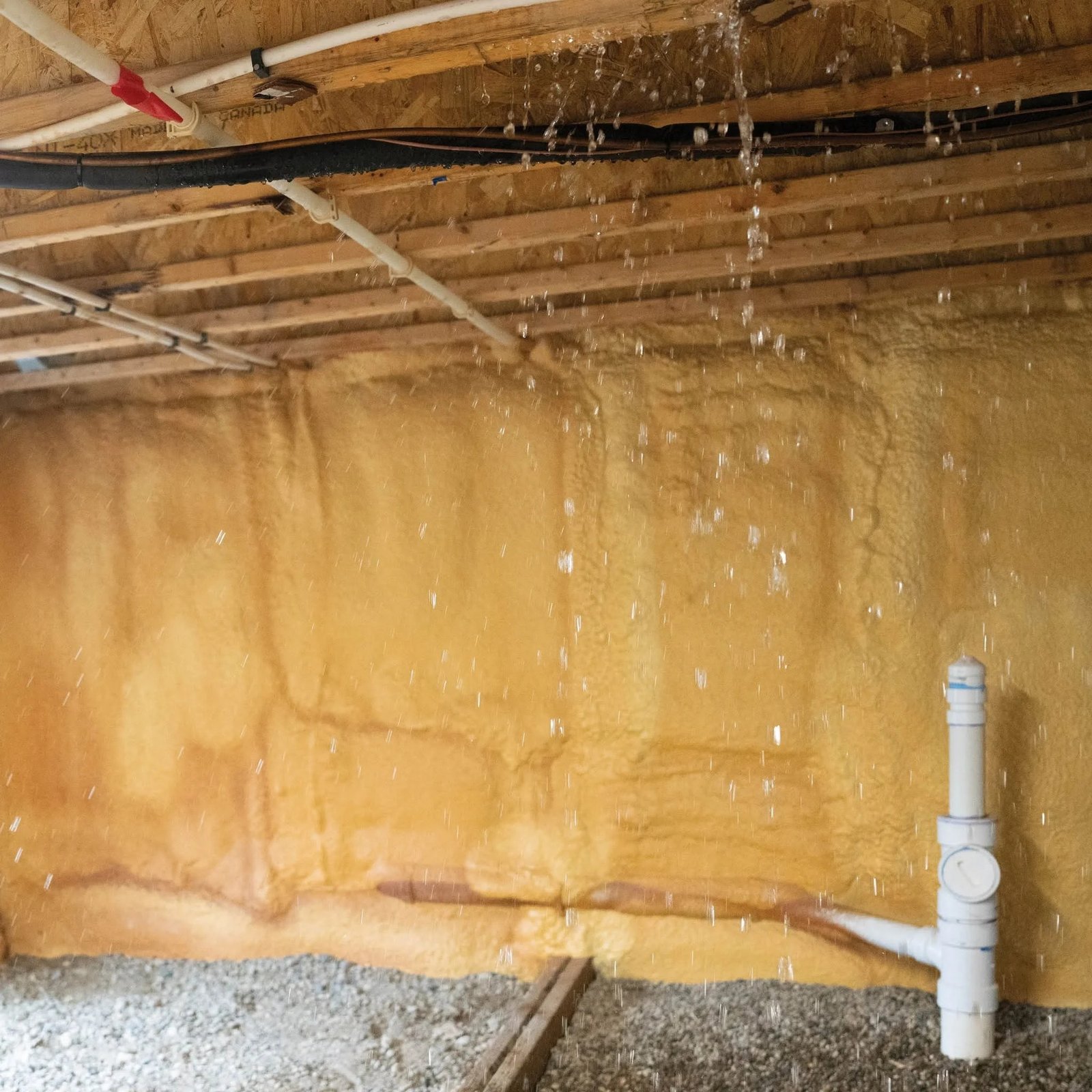
Yes, in most cases, when the water was sudden and accidental — a pipe that burst, a water heater that failed, a supply line that let go, an appliance that overflowed without warning. Standard policies are built to cover exactly that kind of event.
The coverage usually extends to the damage the water caused, not to the thing that broke. Your policy will typically pay to dry the structure, remove ruined material and rebuild. It will not usually pay to replace the failed pipe itself.
Three categories are commonly excluded regardless of how sudden they felt at the time: flooding from outside the building, gradual damage from a leak that developed slowly, and sewer or drain backup unless you bought the endorsement. Each one is covered in its own section below.
One useful way carriers themselves frame it: water coming from the top down — rain through a storm-opened roof, a burst supply line upstairs, an overflowing appliance — is generally covered. Water coming from the bottom up — flooding, groundwater, sewer backup — generally is not, without additional coverage.
Call (719) 618-9013. Describe what happened and we will tell you honestly which side of these lines it is likely to fall on.
📞 Call (719) 618-9013Colorado Springs
What does "sudden and accidental" actually mean?
It means the event happened abruptly and was not something you could reasonably have known about and prevented. That phrase, or language very close to it, is the hinge on which most water damage claims turn.
A supply line that ruptures on a Tuesday afternoon is sudden. The same supply line, weeping quietly behind a kitchen cabinet for eight months until the floor buckles, is gradual — and gradual damage is where carriers deny.
This matters more than most homeowners realise. Water damage and freezing is the second most common home insurance claim category in the United States, running roughly 24% of all claims, and it carries the highest denial rate of any category at around 10%. The reason given is almost always the same: the damage was judged gradual or maintenance-related rather than sudden.
So the practical question on any claim is not “was there water?” It is “how long was there water, and could you have known?”
What tips a claim from sudden to gradual
- Visible staining that predates the event. An adjuster who sees an old tide line above the fresh damage will ask about it.
- Corrosion or mineral deposit at the failure point. That takes time to form and it is photographed.
- A repair you started and did not finish.
- Delay between discovery and reporting. If you found it in March and called in June, the gap is the problem.
None of this means a slow leak is automatically denied. It means the burden shifts, and documentation is what carries it.
Water damage
What is not covered?
Four things, consistently.
Flooding. Water that entered the building from outside at ground level. Excluded from every standard homeowners policy. Covered only by separate flood insurance, through the NFIP or a private carrier. Flood policies typically carry a waiting period of about 30 days before coverage begins, so they cannot be bought once a storm is in the forecast.
Gradual damage and seepage. Long-term leaks, condensation, and anything the policy treats as a maintenance failure. Also commonly excluded: damage from a leak you knew about and did not repair.
Sewer and drain backup. Excluded from most base policies. Available as an endorsement — a rider you add for an extra premium, usually with its own limit well below your dwelling coverage.
Mold, beyond a sublimit. Mold is typically covered only when it results from a covered water loss, and even then most policies cap it at a specific figure that is far lower than the main dwelling limit. Mold from humidity, seepage or a maintenance issue is generally not covered at all.
Colorado Springs
Why is flooding excluded, and does that matter in Colorado Springs?
It matters enormously here, and most homeowners in this city do not know they have the exposure.
Flash flooding is the most common natural hazard in Colorado Springs according to the City’s Office of Emergency Management. It is not driven by a river cresting over days. It is driven by burn scars and terrain, and it happens in minutes.
The 2012 Waldo Canyon Fire burned 18,247 acres across four sub-watersheds — Fountain Creek, Camp Creek, Douglas Creek and Monument Creek. Burned soil turns hydrophobic: it sheds water rather than absorbing it. Flooding off that scar can begin within about 15 minutes of heavy rain starting, on rainfall totals that would do nothing in an unburned watershed. The 2013 Black Forest Fire scar behaves the same way.
Which means a home in Rockrimmon or Mountain Shadows (80919), sitting below the Waldo scar, can take on water from a storm that never touched a floodplain — and a standard homeowners policy will not pay a cent of it. The same applies through Manitou Springs and the Ute Pass corridor (80829), along the creek corridors in the southeast (80910, 80916), and around the Black Forest scar (80908).
Floodplain status is not the whole picture. Floodplain mapping for El Paso County is administered through the Pikes Peak Regional Building Department and is worth checking for your address. But burn-scar runoff arrives from above, not from a creek, and it does not respect a mapped boundary. Look at what is uphill of you as well as what is on the map.
Water on the floor right now?
Tell us where it came from and how long it has been there. We will give you a time, not a window.
24/7 — Colorado Springs and El Paso County
Water damage
Is hail damage covered, and why does hail matter so much here?
Hail damage to the roof is generally covered, and — this is the part people miss — hail is a water damage cause, not just a roofing one.
The sequence is a two-stage loss. Hail opens the building envelope. Nothing much happens that day. Then the next storm arrives and water comes in through the opening, into the attic, down through the ceiling, into the walls. The interior damage is usually treated as covered because a storm-created opening is a sudden event — but only if stage one is documented. If the roof damage was never recorded, the interior claim looks like it came from a roof that was simply old.
Hail is also the single largest thing you are already paying for. The Colorado Division of Insurance’s February 2026 analysis — built from data supplied by 20 homeowners carriers representing roughly 80% of the market across 11 counties — found that hail accounts for 26% to 54% of a Colorado homeowner’s total premium depending on county, and roughly 50% along the Front Range.
For context on where that leaves Colorado homeowners: the average premium in this state reached about $6,630 in 2026, fourth highest in the country.
So if you have had hail, get the roof inspected and documented even when nothing is leaking yet. That record is what makes the next claim payable.
Colorado Springs
What about sewer backup?
Usually not covered without an endorsement, and the endorsement limits are often lower than people expect.
Sewer and drain backup coverage is an add-on. If you have it, check the limit — it is commonly a few thousand dollars, which does not go far in a finished basement once you account for extraction, Category 3 protocol, demolition, drying and reconstruction.
Three local causes to be aware of, because they affect how a claim is characterised:
- Monsoon surcharge. During heavy rain the sanitary sewer system takes on stormwater and mains surcharge. The lowest fixture in the nearest building becomes the relief point, which is usually a basement floor drain.
- Root-intruded clay laterals. Common in the pre-1940 stock downtown, in the Old North End and across the Westside. This is a slow-developing failure that presents suddenly — and “slow-developing” is exactly the language that creates a denial argument.
- Septic failure in Black Forest, Falcon and parts of Security-Widefield. Often treated differently again, and maintenance-related failure is a common denial ground.
Worth knowing: water that entered through a floor drain during outdoor flooding may be characterised as flood, which your homeowners policy excludes entirely regardless of whether you hold the backup endorsement.
Water damage
Do I have to start cleanup before the adjuster arrives?
Yes, and this is the single most common mistake we see people make.
Most policies place a duty on you to take reasonable steps to prevent further damage after a loss. Waiting several days for an adjuster while the water sits does not protect your claim — it works against it, because the additional damage that accrued during the wait may be attributed to your delay rather than to the original event.
What that means practically:
- 1Document first, thoroughly. Photograph and video everything before anything moves. Wide shots of each room, then close-ups of damaged material, then the source if you can see it. Timestamped.
- 2Then mitigate. Extraction and drying should start in hours, not days. Saturated drywall and carpet pad begin supporting mold growth in about 24 to 48 hours.
- 3Keep everything. Receipts, the scope of work, moisture readings, and samples of removed material where practical.
- 4Do not throw anything away before it is photographed — including material you are certain is ruined.
A restoration company that documents properly is producing your claim file as it works. That is a real part of the service, and it is worth asking about before you hire anyone.
Colorado Springs
Will filing a claim raise my premium?
Possibly, and in Colorado the wider context matters more than any single claim.
Colorado premiums have risen sharply, and the primary driver is not water — it is hail, at 26% to 54% of premium depending on county. A single water damage claim sits inside a market already under that pressure.
Things worth weighing before you file:
- The size of the loss against your deductible. A claim only modestly above your deductible may not be worth filing.
- Your claims history. Frequency tends to matter more than any one claim.
- Whether the cause is likely to recur. A one-off burst pipe reads differently from a third sewer backup.
You can ask a restoration company for a scope and a rough figure before you decide whether to file. We will give you one, and we will tell you if it looks like a claim is not worth opening.
Water damage
What if my claim is denied or delayed?
Colorado gives first-party claimants a specific statutory remedy that most homeowners here have never heard of.
Under C.R.S. § 10-3-1115 and § 10-3-1116, an insurer may not unreasonably delay or deny payment of a first-party claim benefit. Where it does, the statute provides that a claimant may recover two times the covered benefit, plus reasonable attorney fees and costs.
That is a meaningful remedy and it is Colorado-specific. It exists precisely because delay and underpayment are difficult to challenge otherwise.
Practical steps before anyone thinks about litigation:
- 1Get the denial in writing, with the specific policy language the carrier is relying on. Not a phone call — the clause.
- 2Read that clause against what actually happened. Denials on "gradual damage" grounds are frequently arguable when the failure itself was sudden.
- 3Escalate internally first. Ask for a re-inspection, and supply the moisture documentation and photographs from the mitigation.
- 4File a complaint with the Colorado Division of Insurance if the carrier will not engage. It is free and it creates a record.
- 5Then consider counsel. There are time limits on statutory claims, and they are fact-specific.
[LEGAL REVIEW GATE — DO NOT PUBLISH THIS SECTION UNTIL A COLORADO ATTORNEY HAS APPROVED THE WORDING.] The statutory summary above is accurate as written but the limitation period is fact-specific and must not be stated on the page without review. See Bible Part 16, item 3.
📞 Call (719) 618-9013Colorado Springs
What should I do right now?
If water is active, deal with the water first — the claim is a paperwork problem and the building is a clock.
- 1Stop the source. Shut off at the main if it is internal.
- 2Photograph everything, in place, before you move it.
- 3Call your carrier and open the claim. Get the claim number.
- 4Start mitigation. Do not wait for the adjuster.
- 5Keep every document.
Call (719) 618-9013. We will tell you what your insurer is likely to say before you file — and if we think you should not file, we will say that too.
📞 Call (719) 618-9013Frequently asked
Questions people actually ask
Does insurance cover mold?
What if the leak was slow and I did not notice it?
Does it cover the pipe itself, or just the damage?
What is my deductible likely to be?
Do I have to use the contractor my insurer recommends?
Call Dry Standard Restoration
IICRC-certified. We meter before we quote, and you get the readings.
24/7 — Colorado Springs and El Paso County